
"This post contains affiliate links. If you click through and make a purchase, we may earn a small commission at no extra cost to you."
Air fryer liners are a popular accessory for reducing mess and making cleanup easier, but choosing between silicone and paper liners is not always straightforward. Both options are widely available and designed for air fryer use, yet they suit different cooking habits and preferences.
Silicone liners are reusable and durable, while paper liners focus on convenience and quick disposal. Neither option is automatically “better” for everyone, and the right choice often depends on how frequently you use your air fryer and what types of food you cook.
If you’re unsure about safety, it’s worth understanding how air fryer liners are designed to be used correctly.
In this guide, we’ll compare silicone and paper air fryer liners side by side to help you decide which option is better suited to your everyday cooking needs.
What Are Silicone Air Fryer Liners?
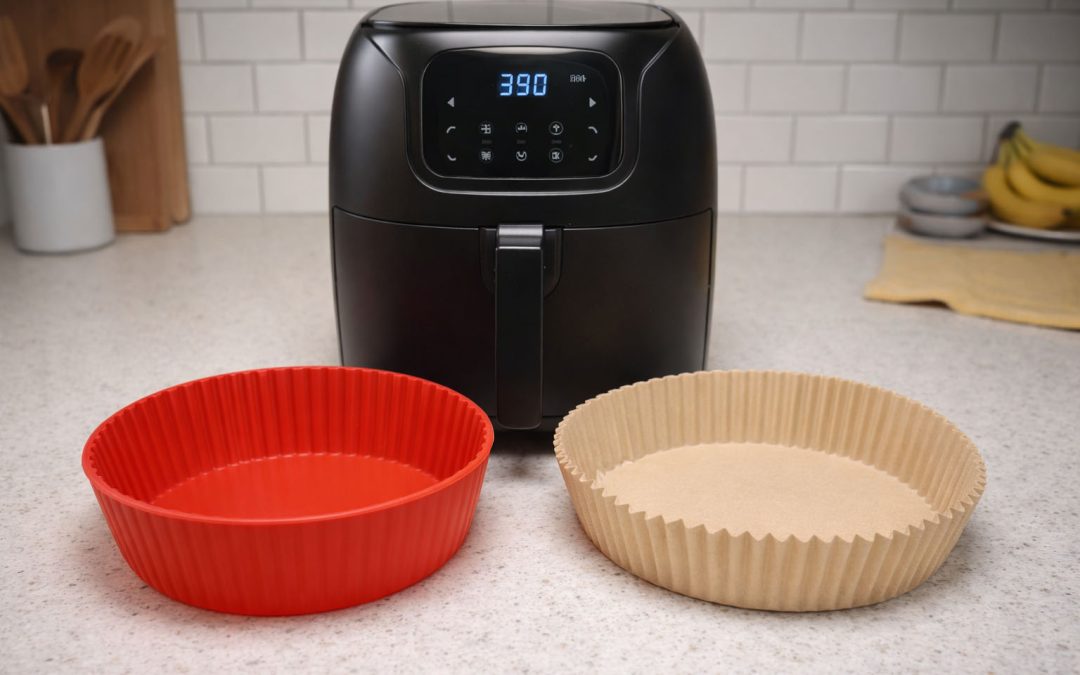
Silicone air fryer liners are reusable accessories made from food-grade silicone that can withstand the high temperatures used during air frying. They are designed to sit inside the basket and catch grease, crumbs, and food residue during cooking.
Most silicone liners feature raised ridges or grooves that help lift food slightly, allowing excess oil to drain away while maintaining airflow. Because they are reusable, silicone liners are often chosen by people who use their air fryer regularly and want to reduce waste.
Silicone liners are typically flexible, easy to store, and many are dishwasher safe, making them a practical long-term option for everyday use.
Silicone air fryer liners are widely available in different sizes and designs to suit a range of air fryer baskets.
What Are Paper Air Fryer Liners?
Paper air fryer liners are usually made from heat-resistant parchment-style paper and are designed for single use. Like silicone liners, they sit inside the air fryer basket to catch grease and food residue.
Paper liners are popular because of their convenience. After cooking, the liner can be removed and thrown away, which reduces the need for cleaning the basket. This makes them particularly appealing for quick meals or when cooking messy foods.
Because they are disposable, paper liners are often sold in bulk packs and are typically chosen for occasional use rather than daily cooking.
Paper air fryer liners are commonly sold in bulk packs and are available in various sizes.
Key Differences Between Silicone and Paper Liners
The main difference between silicone and paper air fryer liners is reusability. Silicone liners are designed for repeated use, while paper liners are intended to be thrown away after each cook.
Silicone liners tend to be more durable and structured, which can help keep food stable during cooking. Paper liners, on the other hand, are lightweight and rely on the weight of the food to stay in place.
Another difference is cleanup. Silicone liners require washing, either by hand or in a dishwasher, whereas paper liners eliminate washing altogether. Both options can slightly affect airflow if they do not fit properly, so choosing the correct size is important.
Which Is Better for Everyday Cooking?
For everyday cooking, silicone air fryer liners are often the better option for people who use their air fryer frequently. Their reusable nature makes them cost-effective over time, and they are well suited to regular meals.
Paper liners may be more appealing for those who use their air fryer occasionally or want to minimise cleanup after cooking. They are also useful when preparing particularly greasy or saucy foods, where quick disposal is preferred.
Ultimately, the better option depends on how often you cook and whether you prioritise convenience or reusability.
Liners are just one of many air fryer accessories that can make everyday cooking easier and more convenient.
Cleaning and Reusability
Cleaning is one of the main considerations when choosing between silicone and paper liners. Silicone liners need to be cleaned after use, but many are dishwasher safe and easy to maintain with regular washing.
Paper liners require no cleaning at all, which is their main advantage. However, because they are single-use, they generate more waste and need to be replaced regularly.
Over time, some users prefer silicone liners for their long-term practicality, while others value the simplicity of paper liners for quick cooking sessions.
Cost and Convenience
In terms of cost, silicone liners usually have a higher upfront price but can be reused many times, making them more economical over the long term. Paper liners are cheaper initially but require ongoing purchases as they are disposable.
Convenience also plays a role. Paper liners are quick to use and dispose of, while silicone liners require washing and storage. Many households find that having both options available offers the most flexibility.
Final Verdict
Silicone and paper air fryer liners both have their advantages, and neither option is universally better than the other. Silicone liners are ideal for regular use and long-term value, while paper liners offer maximum convenience for quick or occasional cooking.
The best choice depends on your cooking habits, how often you use your air fryer, and how much time you want to spend on cleanup. For many people, using a combination of both provides the best balance of convenience and practicality.
As an Amazon Associate, we earn from qualifying purchases.